





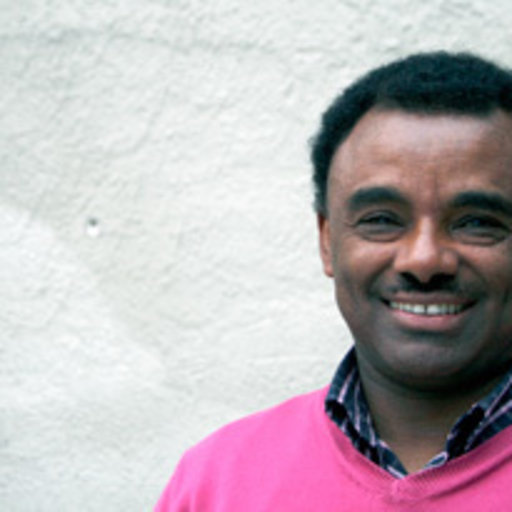





GIRMA BERHANU
(Professor)
The three political regimes I am familiar with in Ethiopia have all used the term “democracy” in their official names or ideological framing. However, in each case, the reality has differed significantly from the label.
The military regime known as the Derg adopted the name People’s Democratic Republic of Ethiopia. Despite including the word “democratic,” it was in practice a one-party authoritarian state. There were no free elections, and the government relied heavily on repression, including the period known as the Red Terror. The name suggested democracy, but the system clearly was not.
During the EPRDF era (1991–2019), the ruling coalition introduced what it called “revolutionary democracy.” Elections were held and multiple political parties formally existed. However, one coalition dominated political life for decades, while opposition groups and independent media faced significant restrictions. Ethiopia was officially a federal parliamentary republic, with a powerful Prime Minister and a largely ceremonial President. In practice, however, power was highly centralized.
This period also introduced an ethnic federal system that divided the country into regions based on ethnolinguistic identity. Critics argue that this structure entrenched divisions and created a hierarchy in governance, with certain groups holding disproportionate political influence.
In the recent period (2019–present) under Abiy Ahmed, initial reforms appeared to expand political freedoms. However, the situation has since deteriorated. The government has been involved in multiple internal conflicts, including wars affecting Tigrayan and Amhara populations. Thousands of intellectuals, activists, and political opponents have reportedly been imprisoned, raising serious concerns about human rights and political freedoms. Across all three periods, the regimes did not genuinely function as democracies, despite using democratic language or structures. This highlights a broader issue: in politics, labels do not necessarily reflect reality. When the term “democracy” is repeatedly used without corresponding democratic practice, it risks losing its meaning and credibility. This raises an important question: is democracy itself becoming less relevant, or are political systems increasingly exploiting its language while undermining its substance?
Reading How Fascism Works by Jason Stanley has deepened my concern about how fascism can take root within democratic systems. In the book, Stanley identifies ten key pillars that enable authoritarian movements to thrive, often by dividing societies into “us” versus “them.” His analysis feels especially relevant today, as it highlights how fragile democratic cultures can become when these tactics go unrecognized.
Stanley draws clear parallels between historical fascist movements and contemporary political trends, demonstrating that these strategies are not relics of the past. Instead, they are being repurposed and adapted within modern democracies. He stresses the importance of recognizing these patterns early in order to resist their influence and protect democratic institutions.
By understanding how fascism operates—through division, propaganda, and the manipulation of truth—individuals and societies are better equipped to defend civil rights and democratic values. Stanley’s work is therefore not only a critical examination of history but also a timely warning and a call to vigilance in the present.
Developments in countries such as the United States, Hungary(?), and India are often cited by scholars and commentators as warning signs of democratic backsliding, where institutions, norms, or freedoms face increasing pressure. The United States, long seen as a leading democratic power and global actor, is not immune to these concerns. Debates about polarization, institutional trust, and the resilience of democratic norms raise important questions about its future direction.
Rather than suggesting that democracy is disappearing, these developments point to how it can be strained, contested, and reshaped. This makes the need for awareness, accountability, and civic engagement all the more urgent.
Even here at home in Sweden, I worry about the rise of the Sweden Democrats (SD). The party has documented roots in extremist milieus, including skinhead culture and strongly anti-immigrant rhetoric. According to the party’s own historical review (often referred to as a “white paper”), some of its early figures had connections to nationalist and far-right movements.
When Jimmie Åkesson, the current party leader, joined in the mid-1990s, SD was described as carrying a heavy ideological legacy. The historian Tony Gustafsson characterizes the party’s early environment as a mix of nationalist, xenophobic, and, at times, openly extremist ideas. He also links the party’s origins to Bevara Sverige Svenskt (BSS), which has been described by researchers as a racist and far-right campaign organization. Many of the party’s early representatives had direct or indirect ties to BSS, and some were associated with neo-fascist or National Socialist movements.
In its early years, the party was also marked by incidents involving Holocaust denial, antisemitic rhetoric, and hostile portrayals of immigrants and refugees. Over time, SD has sought to distance itself from these elements and rebrand its image, but debates continue about how to interpret its history and current political direction. With elections approaching in Sweden, there is concern among some observers that SD could make significant gains. This moment is seen by many as an important test for the country’s political landscape. Regardless of political position, it underscores the importance of public engagement, critical discussion, and vigilance in safeguarding democratic values.
Until I moved to Sweden, I thought democracy was mainly about elections and majority rule. It took me several years to grasp its broader conceptual foundations, as well as the importance of institutions and their real-world implications.Over time, I spoke with many people—especially young people I worked with on school assignments—about how they understand democracy. Most described it in terms of majority rule and free elections; a few mentioned freedom of speech. This pattern revealed something important: one of the most neglected areas, both in education and in public discourse, is a deeper understanding of democracy—what it actually entails and how it can be sustained. Many respondents could name voting as a core feature, but were less able to explain how a functioning democracy operates in practice or to articulate its underlying principles. A fuller picture includes several interdependent elements: free and fair elections; the rule of law, where everyone—including those in power—is bound by the same legal framework; the protection of fundamental rights such as speech, press, and religion; mechanisms of accountability that hold leaders responsible; and participation that extends beyond elections, including civic engagement and public deliberation. Democracy is not only a system of governance; it is also a set of values. It rests on the belief that people should have a meaningful say in decisions that affect their lives, that power must be limited and shared, and that disagreement is not a threat but a condition of political life—one that requires negotiation and compromise. The reality, however, is that these principles are neither automatic nor self-sustaining. They depend on institutions that function effectively and on citizens who understand, value, and actively uphold them.
I have often debated with myself whether democracy can become fertile ground for fascistic tendencies. Some argue that democracy itself does not inherently produce fascism, but that under certain conditions it can be weakened and exploited, allowing authoritarian movements to rise. While this is a thoughtful distinction, I still find it somewhat unsatisfying when I look at real-world developments.
Observing political dynamics in the United States, I feel a growing concern about how individuals with significant financial resources, combined with simple and emotionally powerful political messaging, can rise to power and shape policies with far-reaching consequences. The influence of money, media, and rhetoric can sometimes overshadow more complex and thoughtful political debate.For example, there have been reports that Donald Trump has actively engaged with oil industry leaders and encouraged investment aligned with his political agenda. In the case of Venezuela, he has promoted the idea of major U.S. oil companies investing heavily in the country’s oil infrastructure, even promising favorable conditions and security for such investments . At the same time, U.S. policy toward countries like Iran has also been closely tied to energy strategy and geopolitical interests, including sanctions and control over oil flows. However, these developments are not solely about individual motives or simple cause-and-effect relationships. They reflect a more complex system where economic interests, geopolitical strategy, and domestic politics intersect.
What remains troubling is how easily democratic systems can be influenced by wealth, simplified narratives, and polarization. When political discourse becomes dominated by fear, identity, or economic promises to powerful groups, it risks sidelining broader societal interests—especially those of vulnerable populations. This raises a difficult but important question: how can democratic societies ensure that political power serves the public good rather than narrow interests? If these trends continue unchecked, democracy may not collapse outright, but it can gradually be reshaped in ways that undermine its core principles.
Take the Weimar Republic as a classic example. It was a democratic system, yet it collapsed and gave way to Nazism under Adolf Hitler. This did not happen because democracy “naturally becomes fascist,” but because of a convergence of pressures: severe economic shocks such as the Great Depression, chronic political fragmentation and instability, weak institutional safeguards, and a widespread loss of trust in democratic governance. Anti-democratic actors also exploited democratic procedures—elections and constitutional appointments—to gain power from within. A similar dynamic can be seen in the rise of Benito Mussolini, who came to power through a mix of political maneuvering and elite backing within a formally constitutional framework.
What is going on, then? Democracy institutionalizes participation and competition, which means extremist movements can operate within it. When institutions are fragile or public trust erodes, such movements can win power through legal means and then begin dismantling democratic constraints from the inside. This dynamic is often described as democratic backsliding or authoritarian capture.
Thinkers have long warned about these vulnerabilities. Alexis de Tocqueville cautioned that democracies could drift toward forms of “soft despotism,” where popular sovereignty gradually yields to centralized authority claiming to act in the people’s name. Hannah Arendt, in her analysis of totalitarianism, highlighted how mass atomization and the breakdown of intermediary institutions can create fertile ground for such movements. More recently, Jason Stanleyargues in How Fascism Works (2020) that illiberal actors strategically exploit democratic freedoms—especially freedom of expression—to erode pluralism and normalize exclusionary politics.
Still, the idea that democracy can fail and be replaced by fascism—but does not inherently produce it—can feel unsatisfying. It may seem, especially when looking at historical and contemporary examples, that the very openness of democracy creates vulnerabilities that can be exploited. The challenge, then, is not to see democracy as inevitably leading to fascism, but to recognize that without strong institutions, civic awareness, and accountability, it can become fragile enough to be turned against itself.
If democracy is often seen as the fairest and most legitimate form of government—giving citizens the power to choose their leaders and shape their societies—how can it be defended so that it is not undermined by forces that seek to destroy it from within? History shows that public faith in democratic governance can weaken during times of severe economic crisis. Periods marked by hyperinflation, widespread hardship, and social disillusionment often lead people to view democratic systems as ineffective and incapable of addressing their needs. In such conditions, political instability creates openings for more extreme movements.In the Weimar Republic, this dynamic was clearly visible. Adolf Hitler and the Nazi Party gained support by exploiting fear, frustration, and uncertainty. Through persuasive propaganda, appeals to nationalism, and promises of renewal, Hitler was able to build a broad base of support. Over time, democratic institutions were gradually dismantled, and Germany transitioned into a totalitarian regime.This case illustrates how democracy can be undermined not only by external threats, but also through internal erosion. When trust declines, institutions weaken, and political actors exploit divisions, the system can begin to turn against itself. Some observers see elements of this pattern in contemporary politics, including in the United States, while recognizing that such risks can emerge in many different contexts. The lesson is not that democracy inevitably fails, but that it requires constant protection—through strong institutions, an informed public, and a commitment to democratic norms—to withstand pressures from within.
To help address vulnerabilities within democratic systems and demonstrate resilience, courts, state officials, and other institutions must remain prepared at all times to uphold the rule of law and ensure the peaceful transfer of power through fair elections. At the same time, mass media—and increasingly digital technologies—play a powerful role in shaping public opinion and influencing electoral outcomes, sometimes in ways that contribute to confusion, polarization, or misinformation. To safeguard democracy, societies need to build strong democratic traditions, robust institutional checks and balances, and a deeply embedded culture of constitutionalism and civic norms. These factors together can help prevent democratic breakdown.
These examples highlight a central lesson: democracy is not self-sustaining. It requires active participation, trust in institutions, and a shared commitment to rules and norms. When economic hardship, political polarization, or misinformation weaken these foundations, democratic systems become more vulnerable to internal stress and exploitation.
In conclusion, democracy remains one of the most effective systems for representing the will of the people, but it is not without risk. The historical experience of Germany and the contemporary challenges seen in many democracies today demonstrate that democratic systems must be continuously protected and strengthened. Rather than assuming democracy will endure on its own, societies must recognize its fragility and actively work to preserve it.
GIRMA BERHANU
Professor
Department of Education and Special Education
Västra Hamngatan 25, A-hus room 168
Mail address: Box 300, 405 30 Göteborg
office: +46-(0)31-786 2325
mobile: +46 704731818
girma.berhanu@ped.gu.se
www.ips.gu.se