











Leaked World Bank report rejects claims from the Bank’s management that no link existed between their programme and villagisation

A major UK- and World Bank-funded development programme in Ethiopia may have contributed to the violent resettlement of a minority ethnic group, a leaked report reveals.
The UK’s Department for International Development was the primary funder of a World Bank-run development project aimed at improving health, education and public services in Ethiopia, contributing more than £388m of UK taxpayer funds to the project.
However, a scathing draft report of the World Bank’s internal watchdog said that due to inadequate oversight, bad audit practices, and a failure to follow its own rules, the Bank has allowed operational links to form between its programme and the Ethiopian government’s controversial resettlement programme.
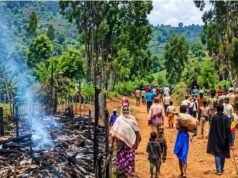
Multiple human rights groups operating in the region have criticised the Ethiopian government’s programme for violently driving tens of thousands of indigenous people, predominantly from the minority Anuak Christian ethnic group, from their homes in order to make way for commercial agriculture projects – allegations the Ethiopian government denies.
Many of those resettled remain in poor conditions lacking even basic facilities in refugee camps in South Sudan.
The leaked World Bank report, obtained by the International Consortium of Investigative Journalists and seen by the Guardian, rejected claims from the Bank’s management that no link existed between their programme and villagisation.
According to the report, weak audit controls meant bank funds – which included over £300m from the UK’s Department for International Development – could have been diverted to implement villagisation.
The report did not itself examine whether the resettlement programme had involved human rights abuses, saying such questions were outside its remit.
However, the watchdog highlighted a series of failures in the planning and implementation of the programme, including a major oversight in its failure to undertake full risk-assessments as required by bank protocol. Crucially for the Anuak people, the bank did not apply required safeguards to protect indigenous groups.
Anuradha Mittal, the founder of the Oakland Institute, a California-based development NGO which is active in the region, said DfID was an active participant in the programme, and should share responsibility for its failings.
“Along with the World Bank and other donors, DfID support constitutes not only financial support but a nod of approval for the Ethiopian regime to bring about ‘economic development’ for the few at the expense of basic human rights and livelihoods of its economically and politically most marginalised ethnic groups,” she said.
Mittal was also critical of the World Bank panel’s draft findings, falling short of directly implicating the World Bank and its fellow donors in the resettlement programme.
“It is quite stunning that the panel does not think that the World Bank is responsible for villagisation-related widespread abuses in Ethiopia resulting in destruction of livelihoods, forced displacement of Anuaks from their fertile lands and forests.”
Disclosure of the draft report’s findings come as the UK government faces increasing scrutiny over its involvement in villagisation.
DfID is the project’s largest donor and in March ministers will face a judicial review over whether the UK’s contributions indirectly funded the resettlement programme. The case has been brought by a farmer from the Gambela region who claims he was violently evicted from his land.
Responding to the report’s findings, David Pred of Inclusive Development International – the NGO which filed the original complaint on the Anuak group’s behalf – said: “The Bank has enabled the forcible transfer of tens of thousands of indigenous people from their ancestral lands.
“The Bank today just doesn’t want to see human rights violations, much less accept that it bears some responsibility when it finances those violations.”
A World Bank spokesman declined to answer the Guardian’s questions about the report.
“As is standard procedure, World Bank staff cannot comment on the results of the inspection panel’s investigation until the executive board of the World Bank Group has had the opportunity to review the panel’s report over the coming weeks.”
In previous statements the bank’s management said there was no evidence of widespread abuses or evictions.
Asked about the findings, a DfID spokesman said: “We do not comment on leaked reports.
“Britain’s support to the Promotion of Basic Services Programme is specifically for the provision of essential services like healthcare, schooling and clean water, and we have no evidence that UK funds have been diverted for other purposes.”