







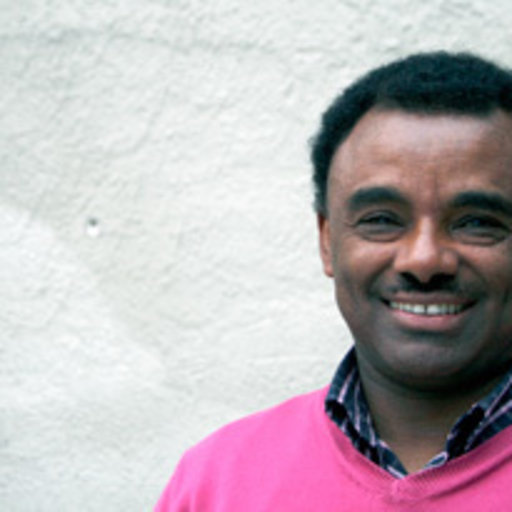



Girma Berhanu (professor)
My years of engagement in social activism and human rights work have taught me an important lesson: a freedom struggle cannot sustain itself when independent intellectual thought is replaced by political conformity. Yet this is precisely the danger I increasingly perceive in the Ethiopian political landscape today.
The distinction between intellectuals and political activists is becoming increasingly blurred. More troubling still is the growing influence of what might be described as a cadre mentality—a political culture in which ideological loyalty takes precedence over independent judgment, dissent is treated as disloyalty, and questioning the dominant political line can be interpreted as betrayal.
This tendency is particularly concerning in the current debate over the direction of the Amhara struggle. Questions concerning political strategy, alliances, negotiations, military cooperation, relations with other Ethiopian constituencies, and the future political order of Ethiopia are far too consequential to be determined by political loyalty or factional pressure. They require serious intellectual examination, open debate, evidence-based reasoning, and the courage to challenge prevailing assumptions—even when such challenges are uncomfortable.
An intellectual is not a cadre. An intellectual’s responsibility is not to defend a political organisation, faction, leader, or predetermined political line. Rather, it is to interrogate ideas, examine evidence, identify contradictions, consider alternative interpretations, and assess possible consequences.Political activists and organisations have a legitimate role in mobilising people and pursuing political objectives. However, intellectuals should not be reduced to instruments for legitimising decisions that have already been made. Their role requires a degree of critical distance, even when they share the broader political aspirations of a movement. Straddling the roles of prophet, critic, political activist, and scientist, intellectuals defy easy categorisation. They often portray themselves as “free-floating” and independent of universities, political parties, and state power. Yet the reality frequently falls short of this ideal. Intellectuals across different historical and political contexts have not always lived up to their claims of autonomy and have often confronted difficult tensions between intellectual independence, political commitment, institutional interests, and social responsibility.
In this article, I wish to venture into the complexity of intellectual life and examine these tensions critically. What does it mean to be an intellectual? How can intellectual independence be maintained in politically charged environments? And what happens when intellectuals become too closely aligned with the organizations, movements, or power structures they are expected to scrutinize? These are large and complex questions, and the space available here does not allow me to address them in their full breadth. Instead, I offer some reflections on the tensions and dilemmas that lie at the heart of intellectual life.
When intellectuals become extensions of political organisations, intellectual independence is compromised. When disagreement is interpreted as disloyalty, genuine debate becomes increasingly difficult. And when political conformity replaces critical thinking, a liberation movement risks reproducing some of the very authoritarian practices and political cultures that it seeks to overcome.
This is not merely an intellectual problem. It is also a political and strategic problem.
The Amhara struggle cannot afford to silence critical voices at a moment when it faces difficult and consequential choices. Military alliances, political partnerships, relations with other Ethiopian constituencies, and competing visions for Ethiopia’s future should all be subjected to rigorous scrutiny. No organisation, leader, intellectual, or political faction should claim a monopoly over what constitutes the correct political line.
A freedom struggle worthy of the name must create space for disagreement. It must distinguish between criticism and betrayal, between independent analysis and political advocacy, and between intellectual responsibility and political discipline.
There is a profound lesson in the history of authoritarian political systems: when political loyalty becomes the principal measure of intellectual legitimacy, independent thought begins to erode. When independent thought is weakened, political movements become more vulnerable to strategic errors, internal authoritarianism, groupthink, and manipulation.
The objective, therefore, should be larger than winning arguments within a particular political camp. It should be to protect the intellectual and political space necessary for a genuine struggle for freedom, democracy, dignity, and self-determination.
The Amhara struggle needs organisation, but it also needs independent minds. It needs political activists, but it must not turn intellectuals into cadres. It needs unity, but unity must not mean uniformity.
The future of the struggle—and potentially the future of Ethiopia itself—depends, in my view, on preserving this distinction.
I also want to be clear about my own position. I believe Ethiopia needs fundamental political change, and I support political processes that can contribute to a more democratic, accountable, inclusive, and just political order. However, supporting political change does not require me to endorse every political or military actor, alliance, strategy, or claim presented in its name. Political change and political conformity are not the same thing.
Recently, I have become increasingly aware of the intense polarisation surrounding the alliance between the Amhara Fano and other armed groups. I do not claim to know enough about these developments, nor have I involved myself deeply enough in all of the political and military dynamics, to take a definitive position on every aspect of these alliances. People from different parts of the world have nevertheless asked me why I have not been more explicit or vocal in taking a position.
My answer has consistently been that I am observing the situation carefully. It is difficult to position oneself when information is fragmented, interpretations are deeply polarised, and numerous actors are involved, often with different interests, objectives, and strategies. The result is considerable uncertainty and confusion.
My reluctance to take a premature position should therefore not be interpreted as indifference to political change. On the contrary, it reflects my conviction that positions on matters of such historical importance should be informed by evidence, context, careful analysis, and intellectual integrity rather than by political pressure or group loyalty.
What concerns me particularly is the extent of labelling, personal attacks, and verbal abuse surrounding these debates. When people become afraid to ask legitimate questions or express disagreement openly, the quality of political deliberation suffers. Such an environment is dangerous for any movement that aspires to contribute to democratic transformation. I have empirical observations that support this concern. In what began as a friendly or comradely WhatsApp group, I have noticed an increasing level of intensity and, at times, striking animosity in response to questions or alternative viewpoints. What I would describe as Mashemakek—the immediate belittling, dismissal, or rejection of an idea, accompanied by labelling the questioner or inquiry itself as an obstacle to be avoided—has become increasingly visible.
I have also observed what appears to be an emerging discourse of personality cult, expressed in ways that are deeply concerning and, at times, embarrassing. It is troubling to see political reverence and unquestioning loyalty re-emerging in a context where one might have assumed that such political practices had been relegated to the past. We had perhaps believed that we had moved beyond this kind of political culture decades ago.
I therefore distinguish clearly between support for political change and uncritical support for particular political actors. A movement that cannot tolerate independent thought, critical inquiry, and internal disagreement will struggle to build the genuinely free society it claims to seek. Political transformation requires more than a change of government or political leadership. It also requires a political culture in which disagreement, scrutiny, accountability, and independent thought are protected.
Ethiopia is at a delicate historical juncture, and the future of the Amhara people is likewise being shaped by developments whose consequences may be profound. This calls for greater transparency, intellectual honesty, and a carefully considered path forward. We need to examine the available evidence, engage with competing interpretations, and distinguish political claims from ideological positions and empirically grounded analysis.
My conclusion is therefore straightforward: I support political change, but I do not believe that political change should require intellectual conformity. Let intellectuals, researchers, journalists, and other independent thinkers engage openly with evidence, historical context, competing perspectives, and difficult questions. Political activists and political organisations have their own legitimate roles, but those roles should not replace independent intellectual inquiry.
The distinction is crucial. One can support the necessity of political transformation while remaining critical, cautious, and intellectually independent of the actors who claim to represent that transformation. For me, this is neither neutrality nor political indifference. Rather, it is a commitment to intellectual independence at a moment when independent thinking is particularly important. For sustainable organizational growth and genuine democratic transformation to take place, freedom movements must actively cultivate feedback, tolerance, and humility. Rather than demanding blind loyalty or ideological uniformity, a healthy political culture should encourage constructive criticism, create space for internal disagreement, and cultivate the intellectual humility to recognize that no single faction holds a monopoly on truth.
By prioritizing evidence, protecting independent thought, and allowing room for disagreement, a movement can guard against the emergence of internal authoritarianism and, in doing so, help lay the intellectual and democratic foundations for the freer society it seeks to build.
A genuine freedom struggle must be capable of accommodating disagreement within its own ranks. It must be strong enough to tolerate questions, confident enough to confront criticism, and mature enough to recognise that political unity cannot be built by suppressing intellectual diversity.
The struggle needs committed people—but it also needs people who are free to think.
Short summary
The article argues that Ethiopia’s political transformation requires independent intellectual thought, open debate, and critical scrutiny—not political conformity or cadre mentality. It distinguishes support for fundamental political change from uncritical loyalty to particular political actors or alliances, while calling for greater transparency, evidence-based analysis, and space for disagreement, particularly within the Amhara political struggle.
References
Bourdieu, P. (1988). Homo academicus (P. Collier, Trans.). Stanford University Press. (Original work published 1984)
Coser, L. A. (1970). Men of ideas: A sociologist’s view. Free Press. (Original work published 1965)
Konrád, G., & Szelényi, I. (1979). The intellectuals on the road to class power. Harcourt Brace Jovanovich.
Kurzman, C. (2008). Democracy denied, 1905–1915: Intellectuals and the fate of democracy. Harvard University Press.
Leonard, M. (2008). What does China think? PublicAffairs.