












Girma Berhanu (Professor)
Introduction
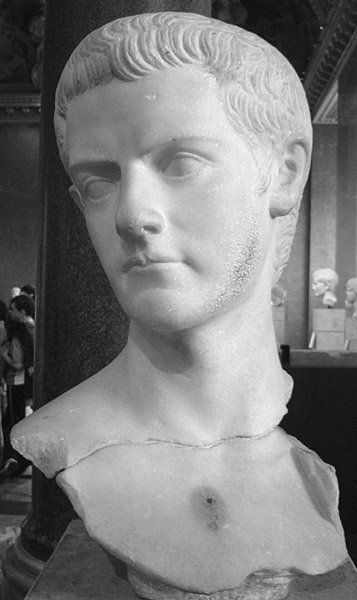
A few days ago, I watched a documentary on the Roman Emperor Caligula (Also known as: Gaius Caesar, Gaius Caesar Germanicus) through the Via Satellite channel. It explored his leadership, cruelty, and eventual descent into madness. I was so engrossed that I remained glued to the television until 3:00 a.m.As I watched, I could not help noticing what I perceived as striking parallels with Abiy Ahmed, the prime minister of Ethiopia. Although the historical context, methods of governance, and instruments of power are vastly different, I found the comparison thought-provoking. Those perceived similarities inspired me to write a short article exploring the parallels.
Seven years ago, I wrote an article titled The Many Faces of Abiy Ahmed: The Nobel Laureate, Ironically Honored for Peace. From the outset, I found Abiy Ahmed to be a deeply troubling and unsettling political figure. My assessment was based on observations of his rhetoric, analyses of his policies, and interviews and accounts concerning his upbringing, education, and background. To me, these factors combined to create a mysterious leader whose political agenda appeared increasingly destructive for the nation.
Over the years, Ethiopia has witnessed repeated armed conflicts, widespread detentions, and numerous reports of massacres, pogroms, and targeted killings, many of which, in my view, have not been adequately investigated. These developments reinforced my early concerns about the country’s direction under his leadership. In my previous writings, magazine articles, and YouTube presentations, I explored various psychological concepts—including narcissism, psychopathy, and other personality-related frameworks—as possible lenses through which to understand his leadership style. I also discussed historical comparisons, including with Adolf Hitler, while recognizing that such analogies are interpretive rather than literal.
Now, after eight years in power, Abiy has, in my view, further consolidated his position through sophisticated political manipulation and by exploiting ethnic grievances. The result has been deepening hostility among communities, extensive bloodshed, and what I believe is a dangerous trajectory toward further national fragmentation.
The documentary on Caligula prompted me to revisit these concerns from a different historical perspective. While no two leaders or historical periods are identical, I found the documentary to offer a useful framework for examining recurring patterns of power, personality, and governance. My hope is that readers—whether they support Abiy Ahmed or strongly oppose him—will consider these historical parallels critically and reflect on what they may suggest about the direction in which Ethiopia is heading. In preparing this paper, I contacted a senior former Ethiopian government minister with extensive experience in diplomacy, governance, and state institutions (Personal communication, July, 302026) I asked for his assessment of the historical Emperor Caligula and whether he saw any parallels with contemporary Ethiopian politics. He responded:
‘“Kassa Anbessaw” (referring to the popular Facebook activist writing under that pseudonym) draws a parallel between Abiy and Caligula. Intrigued, I searched for Caligula to better understand who this man really was. During a period of my own naivety, I compared Abiy to The Great Impostor, recalling the film I watched in high school that was based on the book of the same title. It told the story of a man who assumed false identities to occupy various professional roles. I wrote about this comparison, only to realize a few years later that Abiy was far more than a master impersonator. Later, I compared him to Nero. Eventually, I concluded that he differed even from figures such as Nero, Mussolini, Hitler, or Idi Amin. In my view, Caligula is probably the closest historical parallel, although I have not studied Caligula’s complete history in depth. Abiy appears to derive genuine satisfaction from acts that inflict harm. He has absolute confidence in his own ideas, decisions, and intuitions, seemingly without guilt or self-doubt. He does not even attempt to justify his actions as serving the greater good; instead, everything appears driven by his own interests. To him, leadership is theater—a grand performance that he stages and enjoys without apparent concern for the consequences. In my opinion, he embodies what most people would describe as evil. Within his worldview, anyone who does not applaud him becomes an enemy’.
The Rise of Personal Rule: Power, Image, and the Decline of Institutions
Similarities between Caligula and Abiy Ahmed have been identified by some critics in the way both are perceived to have concentrated political authority around themselves rather than strengthening independent institutions. Another frequently cited parallel is the cultivation of a highly personalized public image. Caligula projected supreme authority through imperial symbolism and ceremonies, while critics argue that Abiy Ahmed has increasingly centered political discourse on his own vision, leadership, and achievements.
Early in his tenure, Abiy introduced Medemer (“Synergy” or “Coming Together”), presenting it as the philosophical foundation for Ethiopia’s future and a framework for overcoming the country’s political and social divisions. The government promoted the book extensively through official channels, portraying it as the intellectual blueprint for national renewal.
The book, however, received sharply divided reactions. Supporters viewed Medemer as an ambitious attempt to articulate a unifying national philosophy. Critics, by contrast, dismissed it as a collection of broad aspirations lacking intellectual depth or practical policy prescriptions. Some described it as a work of popular self-help rather than a serious contribution to political thought, arguing that it relied heavily on inspirational language while offering few concrete solutions to Ethiopia’s complex challenges. Others compared its sweeping claims to the ideological manifestos of leaders who sought to elevate their personal political vision into a comprehensive doctrine, suggesting that Medemer functioned as an instrument of political branding as much as a program of governance.
From this perspective, Medemer became more than a book; it became part of a broader effort to associate Ethiopia’s future with the ideas and personality of a single leader. Critics contend that this emphasis on a personal philosophy contributed to the personalization of power, in which political legitimacy increasingly derived from the leader’s vision rather than from strong institutions, democratic accountability, or inclusive policymaking.
The Prime Minister often appears to project multiple political personas, each associated with distinct rhetoric, behavior, and methods of exercising power. One might describe these as Abiy the Preacher, Abiy the Actor, and Abiy the Prince. Abiy the Preacher speaks of reconciliation, democracy, peace, and national unity. Abiy the Actor presents himself as a leader of exceptional historical destiny, recounting, for example, his mother’s prophecy that he would one day become the seventh king of Ethiopia. Abiy the Prince, however, is reflected in the coercive face of the state, where political dissent is met with arrests, intimidation, or, according to human rights organizations, unlawful killings and other serious abuses.
No sooner are Ethiopians urged to embrace responsible democratic governance than they are reminded, through the Prime Minister’s own narrative, that he was “chosen” from an early age to lead the nation. Critics argue that this juxtaposition reveals a tension between democratic rhetoric and a highly personalized conception of political authority.
The past seven years have been among the bloodiest in Ethiopia’s modern history. The war in Tigray resulted in enormous human suffering, widespread destruction, and the deaths of large numbers of civilians and combatants. Since then, armed conflict has continued in other parts of the country, particularly in the Amhara region, where fighting between government forces and armed groups has been accompanied by repeated reports of civilian casualties, mass displacement, and extensive destruction. Human rights organizations and independent observers have documented allegations of serious violations by multiple parties to these conflicts.
Religious institutions have also been affected by the violence. Only a week ago, reports emerged of a drone strike on a monastery that killed numerous monks and nuns. The incident drew widespread international condemnation and renewed concerns about the protection of civilians and religious sites during Ethiopia’s ongoing conflicts. It was not the first reported attack on a religious institution, underscoring the profound human and cultural costs of the country’s continuing instability.
Although I could not find a corpus of speeches by Caligula for comparison, there is an extensive record of Prime Minister Abiy Ahmed’s speeches in both Amharic and Oromigna. Many of these speeches have been criticized for employing dehumanizing rhetoric and language that critics argue has inflamed ethnic tensions rather than promoted reconciliation. Fortunately, the consequences did not escalate to the extent that many observers feared. Nevertheless, the demonization of a particular ethnic group has invited comparisons with other historical cases of ethnic incitement, including Rwanda.
Abiy has also been criticized for remarks that many have perceived as insensitive toward victims of violence. One widely cited example concerns his emphasis on nationwide tree-planting campaigns at a time when many Ethiopians were being killed or displaced. Critics interpreted the symbolism as deeply disturbing, arguing that he appeared more concerned with planting trees than with addressing the human suffering unfolding across the country. While regional conflicts and mass killings continued, Abiy’s speeches at tree-planting events typically emphasized ecological renewal, national unity, and development. For many observers, this rhetoric stood in stark contrast to the realities of war, displacement, and loss of life.
Critics further contend that some of Abiy’s public statements have trivialized the suffering of victims while simultaneously reinforcing ethnic polarization. In their view, such rhetoric has been inconsistent with Ethiopia’s long-standing traditions of compassion, respect for the dead, and the pursuit of national cohesion.
Another troubling aspect of Abiy Ahmed’s leadership, according to many critics, is the frequent accusation that his public statements are inconsistent with observable realities. In Addis Ababa, jokes about his shifting narratives have become commonplace, reflecting a growing sense of public skepticism. His government has repeatedly portrayed the Ethiopian economy as robust and rapidly growing, even as international financial institutions such as the IMF and the World Bank have expressed serious concerns about the country’s macroeconomic challenges. At the same time, numerous reports have documented increasing poverty, food insecurity, and humanitarian suffering, including in the capital.
From the perspective of Achille Mbembe’s concept of necropolitics, these developments can be interpreted as evidence of a state in which large segments of the population are exposed to conditions of precarity, deprivation, and violence. Critics also argue that the government frequently shifts its political agenda, introducing new initiatives or public campaigns that divert attention from pressing crises and unresolved conflicts. This pattern has contributed to perceptions of inconsistency and unpredictability in governance. Some observers have gone so far as to describe the regime’s decision-making as chaotic and erratic, suggesting that its conduct resembles institutional dysfunction rather than coherent state administration.
Marginalization of opponents, Public Spectacles and Deliberate Torture
Both Caligula and Abiy Ahmed have faced accusations of sidelining or eliminating political rivals, although the historical contexts and methods differ markedly. After the death of his brother in AD 33, Gaius (Caligula) became, alongside Gemellus, the principal heir to Emperor Tiberius. When Tiberius died in AD 37, the Praetorian Prefect Macro ensured that Gaius, rather than Gemellus, succeeded to the throne. Ancient sources even alleged that Gaius and Macro hastened Tiberius’s death by suffocating him with a pillow. Once in power, however, Caligula quickly eliminated both Gemellus and Macro.
The 24-year-old emperor initially enjoyed enormous popularity. As the son of Germanicus and a descendant of Augustus, he was welcomed as a refreshing contrast to the austere Tiberius. He staged lavish public games, reduced taxes, and cultivated widespread goodwill. Yet within months—following a serious illness, according to the ancient historians—his rule took a dramatically different turn. He became increasingly autocratic, humiliated the Senate, encouraged treason trials for political and financial gain, and demanded divine honors. Whether later accounts exaggerated his instability remains debated, but there is broad agreement that his reign rapidly evolved from one of promise to one characterized by arbitrary and personalized rule.
A comparable pattern can be observed during the early months of Abiy Ahmed’s premiership. Initially celebrated as a reformer, he quickly concentrated power in his own hands. In a remarkably short time, political rivals were marginalized, dissenting voices were silenced, and independent centers of influence were systematically weakened or eliminated, leaving little room for meaningful checks on executive authority.
The death of engineer Simegnew Bekele remains one of the most troubling episodes of this period. Simegnew, the chief project manager of the Grand Ethiopian Renaissance Dam (GERD), was widely regarded as the public face of Ethiopia’s flagship infrastructure project. His technical expertise, integrity, and national popularity made him one of the country’s most admired public figures. He was found shot dead in his car in Addis Ababa in July 2018.
For many Ethiopians, the circumstances surrounding his death have never been satisfactorily explained. Critics argue that his death symbolized a broader pattern in which prominent and influential figures disappeared from public life as power became increasingly concentrated around Abiy. While no credible public evidence has established that Abiy ordered or was responsible for Simegnew Bekele’s death, the unanswered questions surrounding the case continue to fuel suspicion and undermine public confidence in the official narrative. Abiy’s personal background has also been the subject of persistent speculation and rumor, particularly on social media and among some political opponents. These rumors have included claims about his family history and the circumstances surrounding his father’s death while he was in Addis Ababa. However, none of these allegations have been substantiated by credible public evidence, and they remain matters of speculation rather than established fact.
The persistence of such rumors reflects the broader climate of political polarization and distrust in Ethiopia, where the absence of transparent investigations into controversial events has fueled competing narratives and conspiracy theories. Consequently, discussions about Abiy Ahmed’s personal life often blur the distinction between documented facts and unverified allegations.
Less than a year after his accession, Caligula restored treason trials, displayed extraordinary cruelty, and developed a reputation for arbitrary and despotic rule. Ancient sources describe him as ordering numerous executions, taking pleasure in public spectacles of suffering, and deliberately humiliating members of the Roman Senate. According to these accounts, he occasionally ordered spectators to be thrown into the arena during interruptions in the games and instructed executioners to inflict slow, painful deaths, reportedly saying, “Strike so that he may feel that he is dying.” He also forced prominent senators to run beside his chariot as a public display of humiliation. Critics of Abiy Ahmed argue that, although his methods are far less theatrical and more discreet, the scale of suffering associated with his rule bears comparison with the destructive consequences attributed to Caligula’s reign. They contend that, while Caligula’s cruelty was often public and performative, Abiy’s has been expressed through modern state institutions and armed conflict rather than personal spectacle.
The comparison also extends to the use of political symbolism. Caligula became notorious for theatrical displays of imperial power, while critics argue that initiatives such as Ethiopia’s National Dialogue risk becoming political theatre if they are perceived as symbolic exercises rather than genuinely inclusive efforts at reconciliation. In both cases, an early period of public optimism gave way to growing disillusionment among significant segments of the population, although the causes, contexts, and historical evidence differ substantially.
At the same time, the analogy has important limitations. Caligula was an absolute Roman emperor ruling within a hereditary imperial system, whereas Abiy Ahmed is the leader of a modern state with a constitutional framework, elections, and political parties, however imperfect or contested those institutions may be. Moreover, much of what is known about Caligula derives from ancient historians such as Suetonius and Cassius Dio, whose accounts were shaped by political biases and literary conventions and remain the subject of considerable scholarly debate (Winterling, 2011). Any comparison should therefore be understood as an analytical analogy rather than an assertion of historical equivalence.
Financial Extravagance and symbolism
Caligula became notorious for lavish spending and theatrical displays of imperial power. Shortly after his accession, he rapidly exhausted the vast reserves accumulated by his predecessor, Tiberius. To finance his extravagance, ancient sources describe him as resorting to the confiscation of wealthy Romans’ estates and other coercive means of raising revenue. In AD 40, he marched an army into Gaul, where his forces reportedly plundered the local population. He then advanced to the northern coast in preparation for an invasion of Britain but instead ordered his soldiers to collect seashells, declaring them the “spoils of the conquered ocean” (Barrett & Yardley, 2023).
History offers numerous examples of rulers who pursued monumental building projects and displays of personal grandeur while their populations endured hardship. Grand palaces, lavish parks, monumental architecture, and extravagant public works have often served as symbols of political ambition and personal prestige rather than responses to urgent public needs.
Critics argue that Abiy Ahmed fits this historical pattern. They contend that, while Ethiopia has faced armed conflict, mass displacement, food insecurity, and severe economic pressures, his government has devoted substantial resources to high-profile projects such as Friendship Square, Unity Park, and other ambitious urban developments. In their view, these projects have come to symbolize misplaced priorities, with monumental architecture taking precedence over humanitarian and economic challenges. They argue that history will remember these projects not simply as physical landmarks but as monuments to misgovernance and political vanity.
Some commentators have compared Abiy’s leadership style to rulers such as Caligula, Nero, and King Ludwig II of Bavaria, arguing that each pursued grandiose visions while their societies confronted profound crises. Although these comparisons are necessarily imperfect and arise from vastly different historical contexts, they highlight recurring themes of spectacle, monumentalism, and the use of ambitious construction projects to project power and cultivate a political legacy. Abiy has also publicly recounted that his mother foretold he would one day become the seventh king of Ethiopia. Critics have argued that this story reflects, or has reinforced, an unusually expansive sense of historical destiny that has influenced his approach to leadership and state-building (Hussein, 2025). Journalist Tom Gardner describes how, on Abiy’s first day as prime minister, he instructed an Emirati architectural firm to transform the Prime Minister’s Office into a sleek, modern complex equipped with high-end furnishings, digital displays, and contemporary design. Gardner further recounts that Abiy soon initiated an ambitious programme of construction and urban redevelopment, including the renovation of the palace grounds, the creation of a public park with an artificial lake and illuminated fountains, and the construction of a science museum and amphitheatre (Ibid.).
The financial scale of these projects was immense. Bicycle lanes and waterside terraces were projected to cost approximately US$1 billion, a recreational park near Mount Entoto required about US$51 million, and the redevelopment of Meskel Square cost an estimated US$73 million. Critics further contend that these projects were accompanied by extensive urban demolitions that displaced residents and resulted in the destruction of historically significant buildings and neighbourhoods in Addis Ababa and Jimma. Supporters of the government, however, argue that these developments form part of a broader strategy for urban renewal, tourism, and long-term economic development(Gardner, 2024)
Caligula further advanced his claims to divinity by ordering, in the summer of AD 40, that a statue of himself be erected in the Temple in Jerusalem. The order threatened to provoke a major religious and political crisis but was ultimately rescinded after the intervention and diplomatic persuasion of Herod Agrippa (Barrett & Yardley, 2023).
By this stage, many members of the Roman political elite had grown increasingly hostile to Caligula’s erratic and tyrannical rule. Several conspiracies emerged, culminating in his assassination in January AD 41, only four months after his return to Rome from Gaul. He was killed during the Palatine Games by Cassius Chaerea, a tribune of the Praetorian Guard, together with Cornelius Sabinus and other conspirators. Caligula’s wife, Caesonia, and their young daughter were also killed shortly afterward, bringing his immediate family line to an end. He was succeeded by his uncle, Claudius (Barrett & Yardley, 2023).
Some critics have drawn parallels between Caligula’s cultivation of a personality cult and aspects of Abiy Ahmed’s public image. They point to occasions such as Adwa Day celebrations in which large portraits of Abiy featured prominently in public spaces, arguing that the emphasis on the sitting prime minister overshadowed historical figures such as Emperor Menelik II, whose victory at the Battle of Adwa is central to Ethiopia’s national memory. In their view, this reflects an effort to reshape historical narratives by placing the current leader at the center of the national story.
Critics have also noted Abiy’s association with Protestant and Pentecostal Christianity and argue that some pastors have portrayed him as a leader specially chosen or anointed by God. They contend that such religious rhetoric contributes to a personality cult by elevating the prime minister beyond ordinary political leadership. Others have expressed concern that this trend has coincided with growing tensions involving the Ethiopian Orthodox Tewahedo Church and has altered the traditional relationship between religion and political authority in Ethiopia. Whether these developments constitute a deliberate personality cult remains a matter of political interpretation. Supporters view Abiy’s prominence as a reflection of his political mandate and reform agenda, whereas critics regard it as evidence of an increasingly personalized style of leadership.
Abiy Ahmed’s rule has been characterized by a growing number of laws, regulations, and government directives. Critics argue that this proliferation of rules reflects deeper institutional problems, including bureaucratic expansion, weak accountability, and the potential use of legal mechanisms as instruments of political control. As Tacitus observed in The Annals (Book III, 27), “the more corrupt the state, the more numerous the laws.” Tacitus wrote this statement approximately a century after the reign of Caligula, commenting on the Roman tendency to respond to corruption, disorder, and declining social norms through the continuous creation of new laws. His observation reflects a broader political insight: excessive legislation does not necessarily indicate good governance; in some cases, it can reveal attempts to manage symptoms of deeper institutional failures.
Although Tacitus was not referring specifically to Caligula when he wrote this passage, the idea has relevance to later interpretations of Caligula’s reign. Caligula’s government (AD 37–41) is often remembered in historical tradition for arbitrary decision-making, political repression, and the manipulation of legal authority. The connection, therefore, is not a direct historical reference but a broader comparison about how unchecked power can transform law from a means of justice into a tool of control.
Finally, Caligula has long been portrayed as a ruler marked by megalomania, extreme cruelty, and reckless financial extravagance. Although modern historians debate the accuracy of some ancient accounts, the dominant historical tradition depicts him as an erratic emperor whose conduct alienated both the Roman elite and the broader population. In my assessment, aspects of Abiy Ahmed’s leadership invite comparison with this historical pattern. His government’s investment in monumental construction projects and recreational developments stands in stark contrast to Ethiopia’s profound humanitarian challenges, including armed conflict, mass displacement, food insecurity, and economic hardship. Critics argue that these priorities reflect a leadership style more concerned with legacy, symbolism, and prestige than with addressing the immediate needs of the population. They also contend that the continuation and expansion of multiple armed conflicts have been exacerbated by political decisions made under his administration.
History suggests that leaders who become increasingly insulated from criticism, concentrate power in their own hands, and prioritize personal ambition over the welfare of their citizens often experience dramatic political decline. Whether Abiy Ahmed ultimately follows that trajectory remains to be seen, but his legacy will be judged not by the scale of his monuments or the grandeur of his vision, but by the human consequences of his rule and the condition in which he leaves Ethiopia.
Summary
This article examines the comparison between Abiy Ahmed and Caligula on two levels. The first level explores perceived similarities observed during Abiy’s eight years in power and compares them with patterns found in the historical analysis of rulers such as Caligula. The second level considers the lessons that history offers—both what societies can learn from the past and what they often fail to learn.
A central theme of the comparison is the relationship between power, personal image, and political legitimacy. Caligula’s reign is often associated with claims of divine status and the elevation of the ruler above ordinary political authority. Ancient sources describe his efforts to associate himself with divinity, including the replacement of the heads of statues of gods with his own likeness and attempts to promote his image as more than a human ruler. Critics of Abiy Ahmed argue that elements of his leadership style similarly reflect an effort to cultivate an image of exceptional, almost sacred political authority through public symbolism, religious narratives, and extensive media representation.
Another theme is the use of grand projects and symbolic actions to project power. In Caligula’s case, ancient accounts describe his order that soldiers collect seashells from the shore after a failed campaign against Britain, presenting them as “spoils of war.” This episode has often been interpreted as an example of theatrical power and symbolic domination. Similarly, critics argue that some of Abiy Ahmed’s monumental projects and political initiatives emphasize spectacle and legacy-building while Ethiopia faces severe humanitarian challenges, including conflict, displacement, and economic hardship.
Caligula’s reputation is also closely associated with cruelty, financial extravagance, and the abuse of political authority. Ancient sources describe lavish spending on pleasure projects, extravagant banquets, and costly construction works, as well as the confiscation of property from wealthy citizens through accusations of treason. Critics of Abiy’s government draw comparisons with these patterns, arguing that the use of state resources for prestige projects and disputes over property and displacement reflect similar concerns about priorities and the concentration of power.
Several broader themes associated with Caligula’s reign also appear in comparative studies of authoritarian leadership and provide a useful framework for examining the premiership of Abiy Ahmed:
Critics of Abiy Ahmed’s government argue that these four characteristics are increasingly evident in Ethiopia’s contemporary political trajectory. They contend that the concentration of power, the weakening of institutional constraints, arbitrary governance, and the use of coercion against perceived opponents have contributed to deep political polarization, widespread violence, and a severe humanitarian crisis. The renewed outbreak of armed conflict in northern Ethiopia may represent another indication of the country’s continuing instability. Whether these developments mark a decisive turning point for Abiy Ahmed’s political future remains uncertain, but they underscore the fragility of Ethiopia’s current political order.
However, describing Caligula or contemporary leaders simply as “crazy” risks oversimplifying complex political behavior. Historians and political psychologists generally avoid retrospective psychiatric diagnoses of rulers based solely on their actions. Extreme behavior may result from factors such as unchecked authority, ideological conviction, political incentives, isolation from criticism, corruption, or the institutional effects of concentrated power. Cruel or destructive leadership does not necessarily indicate mental illness.
The broader historical lesson from Caligula’s reign is not merely that individual rulers can become cruel or extravagant, but that political systems without effective checks and accountability create conditions in which personal ambition, vanity, fear, or resentment can shape the direction of an entire state. Across different cultures and historical periods, the dangers of concentrated personal rule have appeared repeatedly. Caligula remains relevant not simply as an example of a “mad emperor,” but as a case study in the risks that emerge when power becomes increasingly personalized and unconstrained.
References
Barrett, A. A., & Yardley, J. C. (2023). The emperor Caligula in the ancient sources. Oxford University Press.
Gardner, T. (2024). The Abiy Project: God, Power and War in the New Ethiopia. Hurst Publishers
Hussein, E. (2025, February 8). Abiy Ahmed and the legacy of grandiose ambitions amid suffering.
Power, T. (2014). Suetonius’ Tacitus. The Journal of Roman Studies, 104, 205–225.
Wardle, D. (1991). When did Gaius Caligula die? Acta Classica, 34, 158–165.
Winterling, A. (2011). Caligula: A biography (D. L. Schneider, G. W. Most, & P. Psoinos, Trans.). University of California Press. (Original work published 2003)
Contact information:
Girma Berhanu
Department of Education and Special Education (Professor)
University of Gothenburg
Box 300, SE 405 30
Göteborg, Sweden
E-mail: Girma.Berhanu@ped.gu.se