








Girma Berhanu (Professor)
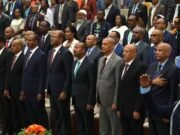
The Ethiopian National Dialogue was presented as a historic opportunity to confront the country’s deep political divisions and lay the foundations for lasting peace. Instead, it has increasingly come to symbolize the opposite. Far from serving as a genuine mechanism for national reconciliation, the process has become one of the most controversial and widely criticized political initiatives in Ethiopia’s recent history. For many Ethiopians, it represents not a sincere search for consensus but a carefully managed political performance designed to project legitimacy rather than resolve conflict.
The initiative, championed by Prime Minister Abiy Ahmed’s government and supported by segments of Ethiopia’s political and intellectual elite, creates the appearance of inclusiveness while systematically avoiding the fundamental questions that lie at the heart of the country’s crisis. Issues relating to the structure of the state, constitutional reform, political representation, accountability for wartime atrocities, and the future of Ethiopia’s multinational federation remain either marginalised or tightly controlled within the dialogue’s framework. Rather than encouraging an open exchange of competing visions for Ethiopia’s future, the process has been criticized for steering participants towards predetermined themes and outcomes.
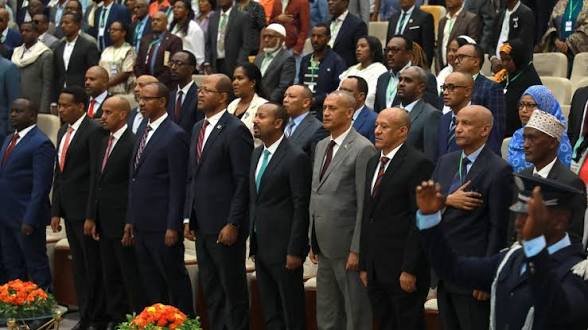
The organization of the dialogue itself reinforces these concerns. Reports indicate that thousands of participants have been divided into numerous small discussion groups tasked with deliberating on carefully selected topics. While this structure conveys the image of broad public participation, critics argue that it fragments debate, limits meaningful interaction among different constituencies, and prevents the emergence of independent national consensus. In this sense, participation risks becoming symbolic rather than substantive, reducing the dialogue to a procedural exercise instead of a genuine negotiation over Ethiopia’s future.
Equally troubling is the political and humanitarian context in which the dialogue is taking place. Large parts of northern Ethiopia continue to experience the devastating consequences of armed conflict. Communities remain displaced, humanitarian access is constrained, and civilians continue to face insecurity, including reports of drone strikes and widespread destruction of livelihoods. Under such circumstances, many question whether meaningful national reconciliation is even possible. Peace processes generally require a minimum level of security, trust, and political openness. Conducting a highly managed dialogue while significant violence persists inevitably undermines its legitimacy and moral credibility.
Perhaps the most significant weakness of the National Dialogue lies in its limited political inclusiveness. A credible national conversation requires the voluntary participation of all major political stakeholders, including opposition parties, armed movements willing to pursue peaceful engagement, civil society organizations, religious leaders, and representatives of affected communities. Where influential actors perceive the process as controlled by the government or believe that outcomes have effectively been predetermined, the dialogue risks becoming an exercise in political validation rather than conflict resolution.
Successful national dialogues elsewhere have demonstrated that legitimacy derives not merely from the number of participants but from the fairness of the process itself. Inclusivity, independence, transparency, and mutual trust are essential prerequisites for building durable political settlements. Without these elements, dialogue can reinforce existing divisions rather than bridge them. Ethiopia’s current process appears vulnerable to precisely this danger.
The government’s supporters argue that the dialogue represents an important beginning and that no peace process can satisfy every political actor. They contend that gradual engagement offers a practical route towards national consensus. Yet this perspective overlooks a fundamental reality: dialogue cannot simply be declared into existence by the state. It must be accepted by those whose participation is essential to resolving the conflict. Legitimacy cannot be manufactured through administrative procedures or carefully choreographed public consultations; it must emerge from broad public confidence in the fairness and independence of the process.
Ethiopia’s political divisions are multifaceted, with ethnic federalism occupying a central place in contemporary public and political debate. More fundamentally, however, the country’s deepest cleavage concerns the legitimacy of the governing regime itself.
This raises a fundamental institutional challenge. Expecting institutions established, controlled, or authorized by the same regime to impartially evaluate or reform it presents an inherent conflict of interest. Rather than serving as mechanisms of accountability, such bodies risk functioning as instruments for consolidating authoritarian rule through propaganda, coercion, and the projection of procedural legitimacy, thereby misleading both domestic and international audiences.
Absent independent conveners, meaningful participation by all major stakeholders—including actors capable of disrupting the process—and institutional safeguards that protect deliberations from the influence of the dominant political authority, such initiatives are unlikely to produce outcomes that are widely perceived as legitimate, fair, or capable of addressing Ethiopia’s underlying political conflicts.
Comparative experience reinforces this concern. Government-initiated national dialogues or reform commissions in authoritarian and hybrid regimes have frequently been organized by ruling authorities, lacked institutional independence, and proceeded without the participation of key opposition actors. Although these processes often generated reports, recommendations, or constitutional proposals, they rarely achieved broad legitimacy or resolved the underlying political conflicts.
Sudan’s National Dialogue (2014–2016). Initiated by President Omar al-Bashir’s government, the dialogue was designed and controlled from the top down. Major rebel movements, including the SPLM-North and the Sudan Revolutionary Front, as well as significant opposition parties, either refused to participate or withdrew, arguing that the process lacked independence and credibility. Although it produced a “National Document” containing hundreds of recommendations, implementation largely failed. Many observers viewed the initiative primarily as an effort to enhance regime legitimacy rather than to foster genuine political consensus. The Bashir government remained in power until its overthrow in 2019.
Yemen’s National Dialogue Conference (2013–2014).Convened during the political transition following the Arab Spring under President Abdrabbuh Mansour Hadi, the conference was broader and enjoyed substantial international support. It produced between 1,400 and 1,800 recommendations addressing issues such as federalism, constitutional reform, and women’s representation. Nevertheless, influential southern movements rejected the process as insufficiently responsive to longstanding grievances, particularly the “Southern Question.” Implementation stalled, and Yemen soon descended into civil war. The case illustrates that even relatively inclusive dialogues struggle when underlying power imbalances remain unresolved and agreements lack credible enforcement mechanisms.
Cameroon’s Major National Dialogue (2019). Convened by President Paul Biya in response to the Anglophone crisis, the dialogue was boycotted by key separatist groups, many federalist voices, and prominent opposition figures. Core issues—including federal restructuring and self-determination—were largely excluded from the agenda. As a result, the initiative was widely criticized as a public-relations exercise aimed at reassuring international partners rather than achieving a negotiated political settlement. The conflict has continued without a durable resolution.
Zimbabwe’s Political Actors Dialogue (POLAD). Established under President Emmerson Mnangagwa following the disputed 2018 elections, POLAD remained dominated by the ruling party after the principal opposition coalition (MDC Alliance) declined to participate. Civil society organizations also criticized the process for its limited inclusiveness and lack of independence. While it generated dialogue and policy discussions, it produced few substantive political reforms and was widely regarded as a partisan mechanism rather than a genuine forum for national consensus.
Taken together, these cases reveal a recurring pattern. When national dialogues are convened, controlled, or substantially influenced by dominant governments in authoritarian or electoral-authoritarian settings, and when the principal conflict parties remain excluded or refuse to participate, the resulting processes may generate discussion, official documents, and a narrative of consultation. However, they seldom produce outcomes that are broadly accepted as legitimate, impartial, or durable solutions to fundamental political conflicts.
Ultimately, Ethiopia’s National Dialogue illustrates the profound gap between political symbolism and political transformation. While it aspires to present itself as a landmark initiative for national reconciliation, its credibility continues to be undermined by ongoing violence, restricted political participation, humanitarian suffering, and widespread public skepticism. Unless these underlying conditions change, the dialogue is unlikely to produce the inclusive political settlement necessary to address Ethiopia’s multiple crises.
For many Ethiopians, the National Dialogue has become less a pathway towards peace than an instrument for consolidating political legitimacy. Until armed conflict subsides, humanitarian needs are addressed, political freedoms are expanded, and all major stakeholders are able to participate freely and on equal terms, the process will struggle to command the confidence of the very people whose future it seeks to shape. A dialogue intended to heal a fractured nation cannot succeed unless it first earns the trust of that nation.
Contact information:
Girma Berhanu
Department of Education and Special Education (Professor)
University of Gothenburg
Box 300, SE 405 30
Göteborg, Sweden
E-mail: Girma.Berhanu@ped.gu.se