







By Girma Berhanu (Professor)
Introduction
This is more than the story of a single family. Nor is it simply a tribute or a letter of remembrance. It is an attempt to illuminate how the trajectories of ordinary people’s lives take shape, unfold and sometimes come to tragic ends in the shanties and neglected, partly dilapidated neighbourhoods of a city. It is also a reflection on the relationship between individual lives, collective memory, historical injustice and the fate of a nation.
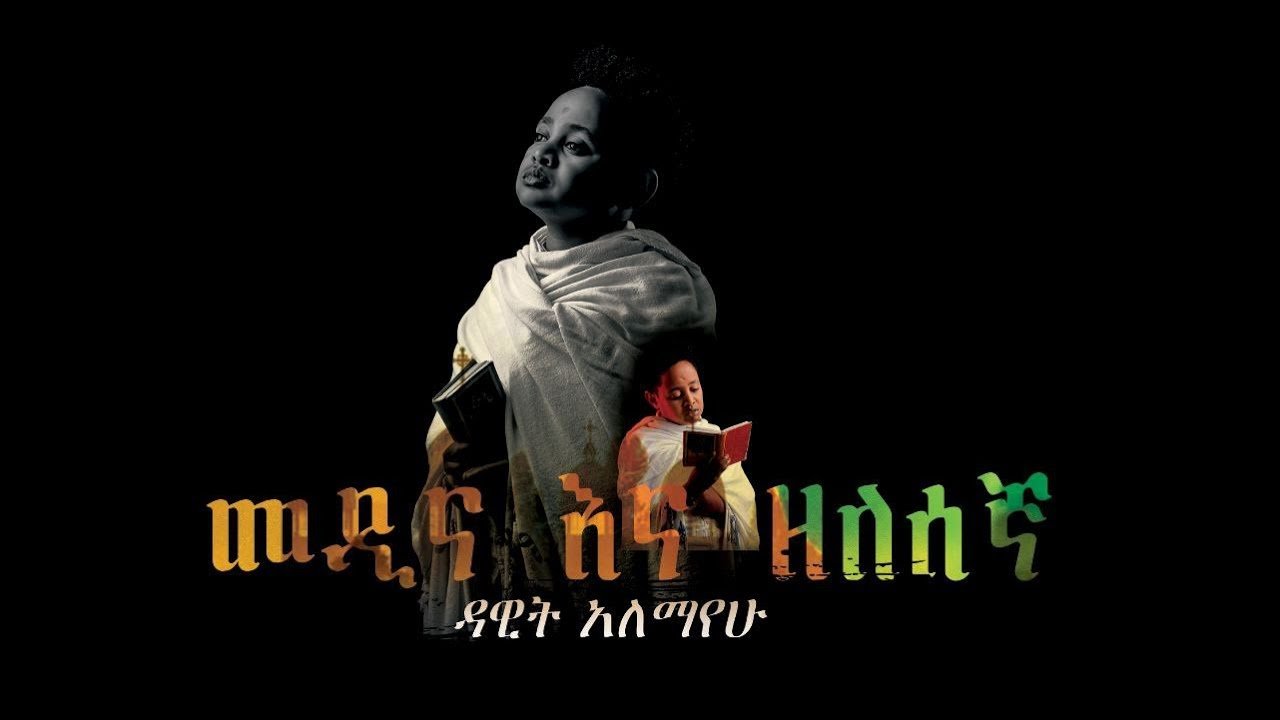
Etye Jemanesh was an extraordinary woman. She embodied strength, resilience, generosity and dignity. Tall, dark-skinned and physically strong, she had a commanding presence in our neighbourhood. During holidays, wealthier families in the area would hire her by the hour to undertake demanding kitchen work. She brewed traditional beer, worked as a domestic servant and took on whatever jobs she could find to raise her two well-behaved and kind-hearted sons.
I observed her and her family closely as I was growing up. Despite her meagre income, she always found something to share with others. Her generosity seemed to exceed her material means. Her presence in the neighbourhood, particularly around Higher 14, Kebele 18, was unmistakable. She was one of those people whose strength was not measured by what they possessed but by what they endured, what they gave and how they carried themselves through life.
Last night, I dreamt about her.
She died prematurely, having spent much of her life supporting others and extending love, respect and protection to those around her. As a young boy, I had watched this woman navigate life’s difficulties without a partner, carrying the enormous responsibility of raising two sons in circumstances that offered her very little. Like so many people who give endlessly but receive very little in return, she left an indelible impression on me.
Decades later, I have begun to see Etye Jemanesh as something much larger than an individual woman. In many ways, I have come to think of her as a personification of Ethiopia itself. She embodied the country I grew up knowing: its strength, resilience, spirituality, generosity and kindness. She represented the ordinary people who, despite poverty, hardship and adversity, continued to nurture families, sustain communities and preserve their humanity.
Etye Jemanesh died too early. And, in a different but equally painful sense, my country is dying because it has failed to learn from people like her. Her life demonstrated how a family, even when burdened by hardship and the absence of a partner, could be sustained and nurtured through determination, compassion and sacrifice. Yet the country she so profoundly represents has increasingly failed to protect the very human qualities that have sustained it for generations.
This story, therefore, is not merely about one woman and her two sons. It is about a country in which countless decent, morally grounded, generous and resilient people have lived and continue to live, despite the heartlessness and despotism of those who dominate its political and, at times, everyday life. It is about the profound contrast between the extraordinary humanity of ordinary Ethiopians and the failure of those entrusted with power to honour, protect and nurture that humanity.
I cried when I thought about this remarkable woman. For a moment, I imagined what it would be like if she could return and see what had become of the world she left behind: her sons gone too early, the houses around her demolished, the familiar neighbourhoodtransformed, and so many of the good people who once gave meaning to that place no longer alive.
I wonder what she would make of it all.
Perhaps she would not complain. Perhaps she would simply look around, as she always did, and find someone in need of help. That was the kind of woman she was.
And that, perhaps, is precisely why her story hurts so much. People like Etye Jemanesh were part of the moral foundation of the country. They built and sustained lives with almost nothing. They gave when they had little, cared when they themselves needed care, and preserved dignity when life offered them every reason to surrender it.
We have lost too many of them. And we are losing the country they helped hold together.
The Most Striking Memory of Etye Jemanesh
During the Ethiopian Red Terror, as history tells us and as many of us personally witnessed, innumerable young people lost their lives. The Red Terror was a campaign of urban counterinsurgency waged primarily in Ethiopia’s major cities, particularly Addis Ababa, between 1976 and 1978. The term was officially used by the government and aptly captures the systematic use of extreme violence to terrorise the population, suppress dissent and eliminate perceived opponents. It remains one of the most brutal campaigns of state-sponsored mass violence in modern African history. The exact number of victims is unknown, although estimates run into the tens of thousands.
A comprehensive account of the Red Terror would require a separate and extensive historical examination. That is not my purpose here. I want instead to share a deeply personal memory of Etye Jemanesh and her extraordinary dignity, humanity and quiet courage in the face of unimaginable brutality.
I was in junior high school at the time. We were playing football with boys who were sometimes a couple of years older than us. As younger boys, we were often assigned to be goalkeepers or sent away on errands by the older ones. Age, physical strength and having older siblings played a significant role in determining the informal hierarchy among us.
One evening, we were told to move in the direction of Kazanchis or Zenebework Timhirt Bet. There was an unusual sense of commotion, accompanied by whispered conversations and secretive exchanges. We stopped playing. I remember seeing Gezahegne and Sisay exchanging their jackets. At the time, I did not understand what was happening or why they were doing it.
Six to ten hours later, Sisay was shot dead near Biret Dildey, in the vicinity of MisrakAtekalay High School. It was my father and Sisay’s uncle who eventually identified his badly battered body.
I had followed the group towards the designated area, where the shooting and killings had already begun, around seven in the evening. Somehow, I managed to escape by entering a river. I eventually made my way home, following the dirty river. No one noticed my return. My mother initially thought I was still playing in the backyard. In fact, she had been out searching for me in the very area where the killings were taking place.
That night, thousands of young people were reportedly killed or rounded up on suspicion of having participated in demonstrations.
The following morning, we heard that the body of a young man had been thrown near the Kebena River. We rushed to see it. His head had been brutally mutilated, with enormous wounds. I stood there looking at him for more than twenty minutes. He was a beautiful young man, perhaps sixteen or seventeen years old. He wore canvas shoes, red trousers and a simple jacket.
Then came the moment I have never forgotten.
Etye Jemanesh rushed to the scene, which was about a kilometre from where we lived. She approached the young man’s body, removed her shamma—the traditional garment worn by many Ethiopian women—and gently covered him with it. She then returned home, quietly crying.
I followed her. She said nothing.
Her gesture spoke louder than words. The dead young man could have been anyone’s son. He could have been her own. Indeed, her son had narrowly escaped a similar fate that evening. I never learned exactly how he managed to survive. Perhaps he had found refuge in the home of a stranger, someone willing to shelter a young person fleeing the violence.
What I witnessed that morning remains one of the most painful and unforgettable experiences of my life. It was a story of unimaginable brutality, but also of extraordinary human compassion. For decades, no one in my immediate neighbourhood spoke openly about what had happened. I have since tried to ask friends about those events, but many remain reluctant to revisit the trauma.
It was carnage.
Etye Jemanesh must have returned home with the image of that dead young man in her mind, wondering about her own son’s miraculous escape. His friend had died wearing her son’s jacket. Her son, remarkably, kept Sisay’s jacket for more than twenty years. At the time, I did not understand the full meaning of the exchange. Only later did I begin to appreciate its significance: friendship, solidarity and perhaps an unspoken attempt to protect one another.
My memories of Etye Jemanesh do not end there.
About a year after that incident, three close friends were taken from their parents’ homes early one morning. They were reportedly taken from a local prison or Kebele 22 facility and subsequently shot. In an especially cruel attempt to inflict further suffering on their families, the parents were reportedly told to pay for the bullets used to kill their sons. They were never allowed to bury their children.
The young men were Tesfaye Tire, Alemayehu Lantideru and Wolday (whose full name I unfortunately cannot recall).
These boys had done virtually nothing to deserve such a fate. Under torture, they may have been forced to confess to things they had never done. I am absolutely certain that their involvement in opposing the regime was no greater than mine. Like many of us, they had participated in demonstrations and youth underground organisations, including the youth vanguard movements, when we were barely thirteen to sixteen years old.
I was particularly close to Tesfaye. The others were equally decent young men, and one of them was only in sixth grade.
What stands out in these memories is that Etye Jemanesh was among the first to rise in the morning, visit the places where the bodies had been found and pray for the dead. I do not know the full extent of what she did for the bereaved families, but I am certain that she offered comfort and solidarity to the three mothers, all of whom were extremely poor. At the same time, she must have been deeply worried about her own son, who was then in the same prison. I later heard that he had narrowly escaped suffering almost the same fate as so many other young men.
I could write much more about Etye Jemanesh. Her story is, in many ways, the story of millions of Ethiopian mothers—women who have endured unimaginable suffering, lost children, witnessed violence and yet continued to demonstrate humanity, compassion and courage.
And this is not merely a story about the past. The suffering continues today, perhaps in even more complicated and devastating forms, as ethnicity has become another dimension of violence, exclusion and persecution.
How can a nation with so many good, compassionate and courageous people become engulfed in such recurrent crises? What is it that allows humanity to survive amid such brutality? What enables the human spirit to prevail when violence, hatred and political divisions threaten to destroy the very foundations of society?
Perhaps Etye Jemanesh’s simple gesture—covering the body of a young stranger with her own shamma—offers part of the answer.
It was an act without political slogans, public recognition or any expectation of reward. It was simply an expression of shared humanity.
Tragically, around this very time last year, her younger son was found dead in the street. With no immediate relatives or family members available to claim his body, the municipality took charge of his remains and placed them in the city’s morgue, where he risked being included in a mass burial. Addis Ababa has, sadly, witnessed cases of unidentified bodies, some reportedly associated with hunger and extreme poverty.
By an extraordinary coincidence, news of his death reached an Ethiopian family visiting Addis Ababa from the United States at the time. Through their intervention, he was identified and given a dignified burial.
His older brother, who was also my friend, had died some twenty years earlier, reportedly due to health complications. He was a good man, a poet and a person of many contradictions: sometimes deeply sad, yet capable of happiness; thoughtful, sensitive and often bewildered by life’s absurdities and, I believe, its profound injustices.
There is something deeply heartbreaking about this family’s story. A mother who once covered the body of another woman’s son with her own shamma, offering him the dignity of a human being in death, eventually experienced the loss of both her own sons under tragic circumstances. The circle of suffering seems almost unbearable.
The story of her sons is also a story of lives that were never allowed to unfold fully. One generation after another was caught in circumstances shaped by political violence, poverty, social vulnerability and the sheer unpredictability of human existence. Behind every such story are dreams that were never realised, relationships that were cut short and families whose dignity was repeatedly tested.
Yet Etye Jemanesh’s earlier gesture remains a powerful testament to the humanity that violence, poverty and injustice can never entirely extinguish.
A Nation’s Lost Humanity
Perhaps this is what makes Etye Jemanesh’s story so important to remember. Her life and the tragic trajectories of her sons reveal a painful contradiction at the heart of Ethiopian society. We have people capable of extraordinary generosity, solidarity and moral courage, yet we repeatedly find ourselves trapped in political cultures characterised by violence, exclusion, domination and indifference to human suffering.
What happens to a nation when the moral values of its ordinary people are no longer reflected in its political institutions and leadership? What happens when compassion becomes an individual act of resistance rather than a shared social principle? And what happens when successive generations inherit not only the memories of violence but also the conditions that reproduce it?
Etye Jemanesh never held political office, commanded an army or occupied a position of influence. She was a poor woman struggling to raise her children. Yet, in one quiet moment beside the Kebena River, she demonstrated a form of moral leadership that many powerful people have failed to demonstrate throughout their lives.
Her shamma became more than a piece of traditional clothing. It became a symbol of motherhood, solidarity, human dignity and the refusal to surrender one’s humanity, even in the face of overwhelming cruelty.
I return to that image repeatedly. A poor woman, with very little to her name, covering the body of a young stranger because someone had to show that he was still a human being deserving of dignity. She did not ask who he was, which political organisation he belonged to or what he might have done. She simply recognised another human being’s suffering.
And perhaps that is the Ethiopia we should be striving to recover.
My question to all my readers is this: How do we preserve the humanity, solidarity and moral courage embodied by people like Etye Jemanesh in a society repeatedly torn apart by violence, hatred and division? And how can a nation reclaim its moral foundations when it has repeatedly failed to protect the very people who sustain it?