







With U.S. Secretary of State John Kerry’s visit to Ethiopia, the recent spate of harsh crackdowns in the country has raised serious questions about the U.S. and international community’s ongoing support for the Ethiopian government.
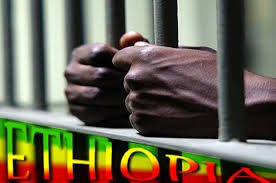
A few days ago, Ethiopian authorities arrested nine journalists and bloggers, subsequently denying them access to lawyers, family, and colleagues. They are held on allegations that they work for foreign human rights groups or used social media to incite violence. Such allegations have become common-place, as Ethiopia’s highly-controversial anti-terrorism laws allow the government to hand down 20-year sentences to anyone who “writes, edits, prints, publishes, publicizes, [or] disseminates” statements the government considers terrorism.
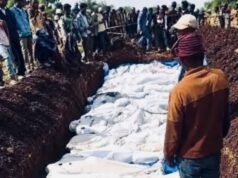
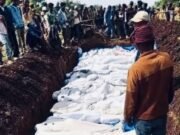
The arrests were shortly followed by a non-violent mass protest led by students in the central Oromia region. According to information from BBC Africa’s Twitter account, security forces opened fire on the students; killing and wounding several, while BBC reports that between 9 and 47 people have been killed.
These troubling recent developments are just the latest in a long pattern of similar activities. In 2005, following national elections widely believed to have been rigged, the Ethiopian government, under the late, authoritarian leader Meles Zenawi, “massacred” approximately 200 protestors, many of them teenagers. More recently, in the last several years, massive protests by the Blue Party opposition group and Muslim groups, have ended in deaths, repression, and state violence.
Further, in an ongoing counter-insurgency against the separatist Ogaden National Liberation Front (ONLF), it has been reported that the Ethiopian army has engaged in executions, rape, torture, arbitrary arrests, and various other abuses. Ethnic groups residing within and around the region have endured arbitrary detentions, torture, and mistreatment in detention, as well as severe restrictions on movement and commercial trade, and minimal access to independent relief assistance. Effectively, such abuses constitute direct threats to their survival.
Notably, the harsh nature of Ethiopia’s counter-insurgency has been paralleled by Ethiopia’s persecution of homosexuals. In a Newsweek report titled Ethiopia’s War on Homosexuals, Katie J.M Baker vividly details how draconian laws and criminalization have led to large-scale marginalization, fear, and violence for Ethiopia’s LGBT community.
State violence and repression in Ethiopia also extend to national development programs. For example, a vital component of Ethiopia’s national agricultural development strategy is “villagization,” a program that entails the relocation of millions of people from locations reserved for industrial plantations. Dating back to the days of the brutal Communist regime, led by the Dergue, villagization has long been condemned by international organizations. Currently, issues arising from the program have led to greater food insecurity, a destruction of livelihoods, and the loss of cultural heritage of ethnic groups. Additionally, the program, which frequently utilizes forced evictions, has been plagued by a plethora of human rights violations. A variety of human rights groups have documented beatings, killings, rapes, imprisonment, intimidation, and political coercion by the government and authorities.
Finally, Ethiopia has continued to occupy sovereign territory of its northern neighbor, Eritrea, in direct violation of international law, and in blatant contravention of the rulings of the Permanent Court of Arbitration’s Eritrea-Ethiopia Boundary Commission. The 12-year-long military occupation has frozen any possibility of developmental cooperation or economic partnership between the two countries, and the military occupation is seen as an influential factor to much of the instability within the Horn of Africa region.
During his visit, Secretary Kerry “raised concerns” about Ethiopia’s recent mass arrests. However, the Ethiopian government’s persistent and flagrant disregard for human rights and international norms calls for more than another simple verbal censure from the international community or Secretary Kerry. More needs to be done to change the deplorable human right violations by Ethiopia.
Last year, U.S. Congressman Chris Smith (R-NJ) announced that the “Ethiopian Human Rights Act” would be reintroduced, arising from the “unacceptable political and human rights environment in Ethiopia.” A potentially more effective response was recently recommended by the renowned international economist, William Easterly. Last week, in an interview with PBS talk show host Tavis Smiley, Easterly suggested that the international community “should stop financing tyranny and repression” in Ethiopia.
For decades, Ethiopia has been highly dependent on external economic assistance. Speaking in the Ethiopian capital, Addis Ababa, Secretary Kerry stated, “the United States is already providing – we’re investing hundreds of millions of dollars here in Ethiopia, and we’ve been deeply involved.” In 2011, Ethiopia was the world’s fifth largest recipient of official humanitarian aid and received $3.6B in total assistance, the latter figure representing between 50-60 percent of its total budget. Additionally, Ethiopia’s 2011 share of total official development assistance – approximately 4 percent – placed it behind only Afghanistan.
With such a critical dependency on foreign aid, threats to end assistance unless Ethiopia changes course may provide a viable mechanism toward improving Ethiopia’s various actions and transgressions. Effectively, the world has appeased the Ethiopian government for far too long, blandishing it with carrots, while witnessing little improvement in the country’s human rights record. Thus, a different approach, wielding the big stick, is overdue.
* Fikrejesus Amahazion is a PhD candidate focusing on political economy, development and human rights.