








 When Ethiopia announced last month that it would release political prisoners and close a controversial detention facility, many viewed it as a promising sign that the Horn of Africa nation was shifting toward real democracy.
Since then, nearly 6,000 political prisoners and journalists have been released, according to Reuters. These included Merera Gudina, chairman of the opposition Oromo Federalist Congress and journalists Darsema Sori and Khalid Mohammed, who were both held on anti-state charges. The attorney general’s office said it would pardon 746 others, including the prominent journalist Eskinder Nega and opposition politician Andualem Arage.
Yet disturbing details continue to emerge over the conditions under which some of those jailed are being released. On Friday (Feb. 9), the Committee to Protect Journalists said Nega was asked to sign a “false confession” stating that he was a member of Ginbot 7, an organization the government deems a terrorist group. After he refused, he was returned to his cell. CPJ also told Quartz that Nega was asked to sign the form a second time during the weekend.
Arage and opposition leader Abebe Kesto were also asked to sign—both refused to endorse the allegations against them, according to family members.
“The government believes that signing a document saying he was a member will exculpate its behavior in jailing an innocent man.”
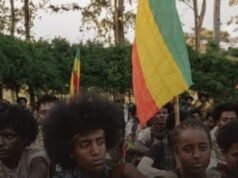
The directive to sign pardon letters jeopardizes the steps taken to calm lingering tensions, observers say. Ethiopia has struggled for the last two years with ongoing protests by the country’s two largest communities, the Oromo and Amhara, which are calling for an end to decades of systemic exclusion. The government reacted to those protests with force, drawing criticism from both the United Nations and its allies in the West. Facing mounting unrest, the government announced it would drop the cases against some of those arrested and on trial in a bid to foster reconciliation.
Angela Quintal, the Africa program director for CPJ, said the government looks like it’s still “trying to justify” Eskinder’s unlawful detention and prosecution. “It’s as though the government believes that signing a document saying he was a member will exculpate its behavior in jailing an innocent man.”
For those who have been pardoned, officials have also said they will be freed only after undergoing “rehabilitation training.” That program has been under fire in the past, with the camps holding the accused described as having conditions akin to those of the Roots, the American saga about slavery.
Befeqadu Hailu, a member of the Zone 9 blogging collective, went through the program for 33 days before he was released in late 2016. Many detainees, he said, lacked shoes, lived in squalid conditions, and suffered physical torture during interrogation. Inmates sat through indoctrination sessions where they were lectured on development, federalism, “Ethiopian Renaissance,” the importance of economic growth, and the failed attempts by “Western” agents to destabilize the country through protests.
The sessions, he said, were conducted by representatives including police officers, army commanders, and government officials. But whenever he and others tried to challenge some of the teachings, he added, “they were rough and there was aggression.”
Jeffrey Smith, the executive director of advocacy nonprofit Vanguard Africa, says that undertaking these actions against prisoners “will only exacerbate the social and political fissures that are increasingly evident in the country.”